
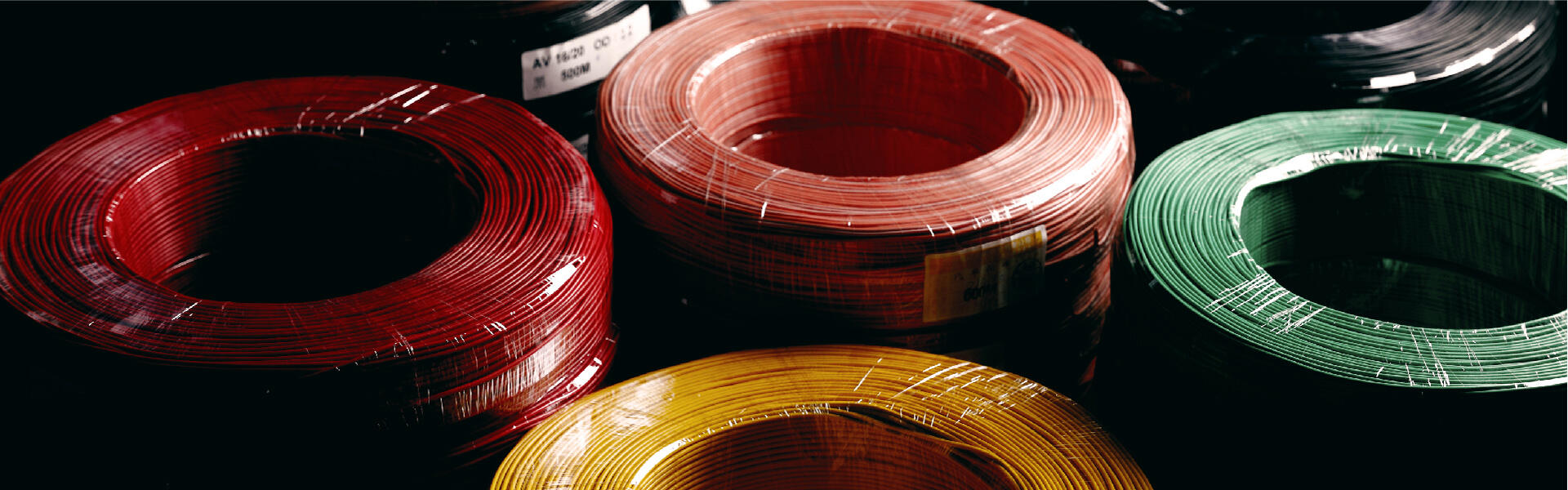
JASO D611
JASO D611 is a Japanese automotive standard established by the Society of Automotive Engineers of Japan (JASO). It defines construction, performance, and testing requirements for low-voltage automotive wires, mainly used in 12V and 24V systems. The standard ensures stable and safe operation of electrical wiring in demanding vehicle environments.
The specification covers single-core wires applied in engine compartments, chassis wiring, interior electronics, and lighting systems. It evaluates insulation thickness, conductor resistance, heat resistance, cold flexibility, and chemical durability to guarantee reliability against temperature variations, mechanical stress, and exposure to fluids.
Under JASO D611, common wire types include AV, AVS, AVSS, and CAVUS, which differ in insulation wall thickness and current capacity. These wires are widely adopted by Japanese OEMs and Asian automakers, often referenced alongside ISO 6722 and SAE J1128 as global benchmarks for modern automotive wire harness design.

AV
AV automotive wire with PVC insulation, JIS C 3406/JASO D611 compliant and rated 80°C/60V. Provides reliable low-voltage performance for lighting, sensors, and dashboards.
AVS
AVS automotive wire with thin-wall PVC insulation, JIS/JASO compliant and rated 80°C/60V. Ideal for compact, flexible wiring in dashboards, doors, lamps, and small units.
AVSS
AVSS automotive wire with super thin-wall PVC insulation, JIS/JASO compliant and rated 80°C/60V. Ideal for compact, flexible wiring in dashboards, doors, lamps, and small units.
AVX
AVX automotive wire with XLPVC insulation, JIS/JASO compliant and rated 100°C/60V. Provides heat resistance and durability for engine, chassis, and general vehicle wiring.
AEX
AEX automotive wire with XLPE insulation, JASO D611 compliant and rated 120°C/60V. Offers superior heat resistance and durability for engine compartments and critical circuits.
EBX
EBX automotive wire with XLPVC insulation, JASO D611 compliant and rated 100°C/60V. Designed for earth bonding and grounding circuits with durability and heat resistance.
CHFUS
CHFUS automotive wire, halogen-free and JASO D611 compliant, rated 85°C/60V. Ultra thin-wall design ensures durability, heat resistance, and eco-friendly vehicle wiring.
CAVUS
CAVUS automotive wire with ultra thin-wall PVC insulation and compressed conductor, JASO D611 compliant and rated 80°C/60V. Ideal for lightweight, compact vehicle harnesses.